
 RSS
RSS Twitter
 Facebook

Showing posts with label Cool. Show all posts
Cool × IT
Los Angeles school officials began rolling out their ambitious plan to equip every kid in the district with an iPad last week, but they've quickly run into a problem...

The LA Unified School District has for now put a halt to students bringing the iPads home, and it might even suspend the program entirely, according to a memo obtained by the LA Times. "I'm guessing this is just a sample of what will likely occur on other campuses once this hits Twitter, YouTube, or other social media sites explaining to our students how to breach or compromise the security of these devices," wrote the district's police chief.
"I want to prevent a 'runaway train' scenario when we may have the ability to put a hold on the roll-out." Another glitch: The district still hasn't settled on a policy of who gets held accountable if a student's iPad turns up missing or stolen.
| LA Daily News #end.
Cool × Moto × World
Car dumping is happening all over the Emirates. Abandoned cars line streets and car parks in Dubai. According to Dubai Municipality, 3,040 cars were deserted across the emirate this year, some found with keys in the ignition. Dubai International Airport is also haunted by these luxury ghosts
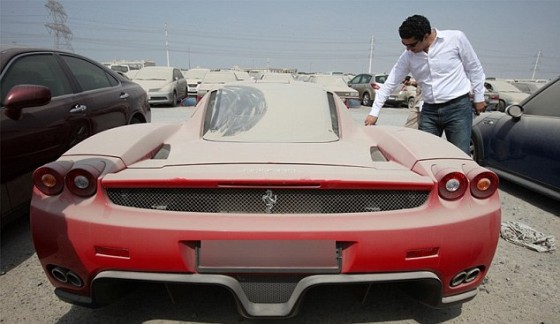
“I’ve seen a few cars here that are covered with dust,” M.T. Hassan, a Sudanese public relations officer told The National. “Maybe some of the owners will return, while others may have already left the country. We really don’t know.”
Ramesh Menon, an Abu Dhabi government worker, suspects the latter. He visited the airport in mid-July. Returning weeks later, the same cars remained parked. “If the owner parked there by mistake, he or she will claim it,” said Menon. “If it’s deliberate, the car should be auctioned off to the public.”
Flat tires are a giveaway. “Abu Dhabi airport has tight security. I don’t think someone will go and puncture tires. The authorities should consider removing them to allow other cars to park,” Menon said. “These cars eat up a lot of space and it gives the city a bad image.”
Car dumping is happening all over the Emirates
Abandoned cars line streets and car parks in Dubai, too. The United Arab Emirates (UAE) was badly bruised by the 2008 financial crisis. Projects folded, investments shrank, and jobs evaporated under the UAE sun. Many debt-ridden expatriates cut their losses and abandoned their cars en route to flights home.
A check on some of the plates revealed that most of the cars had racked up steep fines for traffic violations, unpaid parking fees and car payments and Salik fees and fines (Dubai’s electronic road toll system).
According to Dubai Municipality, 3,040 cars were deserted across the emirate this year, some found with keys in the ignition. Dubai International Airport is also haunted by these luxury ghosts.
Once a car is suspected of being abandoned, municipal inspectors slap on a warning notice. Fifteen days on, if the owner doesn’t respond, the vehicle is confiscated and taken to a scrap yard where it can be reclaimed for about $200. Most are never reclaimed.
Last year Abu Dhabi auctioned off 400 abandoned vehicles. To date, Dubai hasn’t gone the public auction route.
The splashiest derelict to date, a limited edition Enzo Ferrari, was dropped in a car park when it’s debt-ridden British owner fled Dubai in 2010. The red hot rod, one of only 399 in the world and one of the fastest cars ever made, was impounded last year. It’s thought the owner was being chased for unpaid traffic fines. The car, not quite as pricey as Abu Dhabi’s solid gold Mercedes, was valued at $1.6 Million.
Being in debt in Dubai is a crime
The United Arab Emeriates has no bankruptcy law to protect debtors. Post-dated checks are frequently used as a guarantee by UAE businesses, banks and individuals for everything from apartment rentals to multi-billion dollar business deals. Bouncing a check is a criminal offense in the UAE, punishable by fines or jail terms.
Last May, five expats jailed in Dubai went on hunger strike to protest against lengthy prison sentences handed down for rubber checks. The men, mostly real estate developers and businessmen working during Dubai’s boom years, fell into debt when the emirate’s property bubble burst.
I’ve found no follow-on news as to the outcome of that strike, nor was it reported if these guys bailed on their cars. But you see a probable motivation for ditching luxury cars.
But don’t pin the trend on expats only: a recent batch of Abu Dhabi pound cars included ten belonging to Emiratis, seven to Europeans, one to a Russian expatriate and the remainder were owned by local companies.
Police collected nearly $3 million in the last five auctions for cars and motorbikes. Seems some crime pays out after all. | DailyMail / greenprophet#end.
Cool × Health
Eric Schlosser reveals shocking information about food production. His book "Fast Food Nation" throughout the year is not going down the list of best-sellers, "The New York Times."
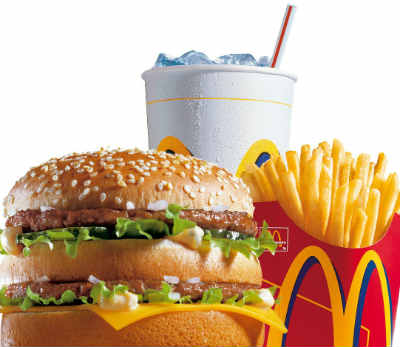
With a tasty and innocent looking food McDonald's lies to the incredible level of advanced science, technology, and marketing aimed primarily at children. Those who uncritically swallow the propaganda Corporate McDonald's (presenting their products as nutritious, and their shrines for fine place to spend with your family free time), you should fasten your seat belts. You have a unique opportunity to find out much more than McDonald's wants its customers to disclose. Enjoy.
Mc'relish
Frying chips was almost sacred to me" - he wrote in his autobiography, Ray Kroc, one of the founders of McDonald's. - "Preparation was rigorously repeated ritual." During the early years of McDonald's fries are made from scratch every day. Potatoes Russet Burbanks type were peeled, cut into strips and fried in McDonald's kitchens. In the mid-sixties, which is when the network has grown up all over America, it was decided to lower costs, reduce the number of suppliers and make it fries tasted the same at every point of the network.
McDonald's began to flip through the frozen french fries in 1966 and few customers noticed the difference. Despite this change had a huge impact on agriculture and the American diet. Universal food has been converted into a high-tech industrial goods. McDonald's fries now come from big factories, which can peel, slice, fry and freeze one million kilograms of potatoes every day. McDoanld's rapid expansion and popularity of cheap, mass-produced fries changed the eating habits of Americans. In 1960, Americans consumed an average of about 40 kg of fresh potatoes and 2 kg of frozen french fries. In 2000, they consumed an average of about 25 kg and 15 kg of fresh frozen French fries.
Today, McDonald's is the largest buyer of potatoes in the United States. Taste McDonald's french fries played a major role in the success of the network. The chips bring more profit than burgers and are praised by customers, competitors, and even critics. Their distinctive taste does not come, however, on the type of potatoes that McDonald's buys the technology it uses, or devices that frying them. Other networks also use Russet Burbanks potatoes, buy chips from the same major suppliers and have similar equipment in their kitchens. Flavor chips is mostly designated type of oil used. For decades, McDonald's fry their french fries in a mixture of cottonseed oil and 93% beef fat. The mixture gave frytkom unique flavor and more harmful fat in each gram of product.
In 1990, under the weight of criticism of cholesterol in French fries, McDonald's switched to pure vegetable oil. This, however, created a problem: how to make chips that taste like beef - but without frying them in beef fat? A look at the ingredients in McDonald's French fries suggests how the problem was solved. At the end of the list of ingredients is inconspicuous, and yet looking mysterious term "natural flavor" ("natural flavor"). This ingredient helps to explain not only why the fries taste so good, but why do most fast foods (in fact - most of the food that it America) tastes like it tastes.
Open your refrigerator, freezer, pantry - and look at the packaging of your food . You'll find "natural flavor" or "artificial flavor" on almost every list of ingredients. The similarities between these two broad categories are far more significant than the differences. Both are obtained by man additives that impart a specific flavor of most foods. People generally buy specific foods for the first time because of its packaging or appearance. Taste usually determines whether they buy it again.
Approximately 90% of the money that Americans now spend on food falls on technologically processed foods.
Techniques for canning, freezing and dehydration, used for reworking, destroying most of the taste of food. In this way, in the U.S. there was a great industry, designed to make food more appetizing. Without this flavor industry today's fast food simply does not exist. Names of the leading American chain fast food like McDonald's or Burger King, were rooted not only in the American reality, but they have also become extremely popular all over the world. Despite this, few are able to identify the companies that produce flavors for fast food.
Flavor industry is shrouded in great mystery. Leading companies do not want to disclose the exact formulas of flavor ingredients, nor indicate its customers. The secret is considered a fundamental matter, having to protect the reputation of popular brands. This is to be done to help the network fast food can continue to keep the public in the belief that the taste of the food they sell come with their own kitchen and not from distant factories run by other companies. McDonald's French fries are one of countless foods whose flavor is only part of a complex production process. In fact, the appearance and taste of what we eat today is an illusion, and that's on purpose.
Corridor taste
The highway from the New Jersey Turnpike's heart flavoring industry - corridor, which is full of refineries and chemical plants. International Flavors & Fragrances (IFF), the largest such company in the world, has a factory at the exit number 8A in Dayton, New Jersey. Givaudan, the world's second-largest flavor company, in turn, has its plant located next door in East Hanover. Haarmann & Reimer, the largest German company, has a plant in Teteboro - in the shadow of Manhattan, just like Tagasako, the largest Japanese flavor company. Flavor Dynamics has a plant in South Plainfield and Frutarom has settled in North Bergen, at the upper Manhattan. Elan Chemical is located in Newark (in the vicinity of aircraft landing near the Polish - MK). A dozen companies manufacture flavors in the corridor between Teaneck and South Brunswick.It is produced in the region is about 2/3 flavors sold in the U.S.
IFF plant in Dayton is a great, light building with a modern complex of offices, attached in front. It is located in the vicinity of the factory, plastics factory near the German chemical company BASF, as well as Jolly French Toast factory and the factory that produces cosmetics brand, "Liz Claiborne". Dozens of trucks were parked at the IFF loading dock the afternoon when I made a visit there, and the vents on the roof hung a thin cloud of steam. Before entering the factory signed a form that prohibits the disclosure of the names of brands of food, which are used in flavors produced by IFF.
Place reminded me of a chocolate factory. In the corridors floated wonderful smells. Men and women in neat white aprons enthusiastically went about their tasks, and laboratory tables and shelves fixed hundreds of small bottles. These bottles contain a strong, light sensitive chemical taste. Protect them from light brown glass and tight nuts. The long chemical names on little white labels were as mysterious to me as medieval Latin. These substances with strange sounding names are mixed and transferred, and then converted into new substances, like magic potions.
I was not invited to the factory IFF, venue of the production process. It was feared that I might reveal trade secrets. In return, I visited various laboratories and kitchens, where the flavors of well-known brands are tested and corrected, and where the basics are created entirely new flavors. "Laboratory snacks" is responsible for the taste of potato flakes and corn, bread, crackers, and pet food. "Laboratory Confection" inventing flavors of ice cream, cookies, candy, toothpaste, lotions, mouthwash and medicines stomach. Everywhere I turned, I saw a well-known and widely advertised products, lying on the desks and shelves laboratory. Laboratory of Fluid was full of brightly colored liquid in a clear bottle. They come here, among othersflavors of the popular beverage, tea, wine and wine similar, natural juices, organic soy drinks and beers. In one of the kitchen food technologist met neat, middle-aged man with an elegant tie into a clean apron, who carefully prepared batches of cookies with white icing and pink and white dots. In another kitchen I saw a pizza oven, BBQ, a machine for making milk drinks a "milk shake" and a machine for cooking chips - identical to those seen in countless bars, fast food (McDonald's, etc..).
IFF, except that it is the largest flavor company in the world, also produces fragrances for six of the ten best-selling perfume in the U.S., including: Estée Lauder - Beautiful, Clinique - Happy, Lancôme - Trésor, and Calvin Klein - Eternity. The company also produces fragrances for household products (including deodorants, detergents, soap, shampoo, polish for furniture and flooring). Creating all these flavors is based in practice on the same principle - the appropriate handling volatile chemicals. The secret behind the scent of your shaving cream is exactly the same as that which determines the taste of dinner from the supermarket freezer.
Natural and artificial
Scientists believe that people have developed the sense of taste, so that it can protect them from poisoning. Edible plants typically taste sweet, harmful rather tartly. taste buds on our tongues can detect the presence of a few basic tastes, including sweet, sour, spicy, salty and sour taste of umami discovered by Japanese scientists, which is triggered by amino acids in the food, as meat, fish, mushrooms, potatoes and sea weeds. However, on the tongue taste sensors are limited in comparison with the human olfactory system, which can detect thousands of different chemical flavorings. What is felt by us taste? - It is primarily the smell of gases that are released by the chemicals that you put your mouth is.
It is the aroma of food can be 90% responsible for her taste. act of drinking, sucking or chewing a substance releases volatile gases. These pass from the mouth and nose (or by the back of the mouth) to a thin layer of nerve cells, called "olfactory epithelium," located at the base of your nose and between the eyes. Your brain combines the complex smell signals from the olfactory epithelium ("olfactory epithelium") with simple taste signals from your tongue, determines the taste for what is in your mouth and decides further.
Preferences human habits, like nature, are formed in the first few years of life, through a process of socialization. Infants from birth prefer sweet tastes and reject sour. Older children can learn to liking to spicy food, ordinary healthy food or fast food - depending on what people eat around them. The human sense of smell is not yet fully tested. But we know that it is very dependent on psychological factors and expectations.
'Human mind deliberately focused only on some aromas that surround us, and rejects the vast majority. People can grow up in a habituation to unpleasant or pleasant odors. They can also stop noticing something that once bothered. Smell and memory are interconnected. Smell may suddenly get out of our memories long forgotten the situation. Food smells from childhood leave a lasting impression and adults often return to them, do not always know why this is happening. This "comfort food" that memory comes back to us, it becomes a source of satisfaction and sense of security. It is a fact that high-speed networks using food carefully. Memories of childhood Happy Meals that are served with fries, can translate into frequent visits to McDonald's in adulthood. On average, Americans eat fries out about 4 times a week.
Taste of human desire was in most cases not appreciated and researched by force in history. Over the millennia, empires were built, unknown lands conquered, and the great religions and philosophies forever changed - all the spice trade. In 1492, Christopher Columbus set out to find spices. Today, the influence of taste to the world market is no less effective. Rise and fall of corporate empires, the companies of beverages "soft drink" (Coca Cola), dry snacks (like potato chips) and network-foods (like McDonald's) are often determined how their products taste.
Short history
Industry flavor appeared in the mid-nineteenth century, when the processed food technology began to be produced on a mass scale. Recognizing the need for flavor additives, early manufacturers of processed foods have asked the perfumers who have a long time experience with essential oils and volatile aromas.
The great perfume houses of England, France and the Netherlands produced many of the first flavors. At the beginning of the twentieth century, thanks to a strong chemical industry, Germany took the lead in the production of technical flavors. (Translator's note: the first combat use of natural gas to the mass murder of soldiers in World War I is an example of advanced German chemical industry during this period.) As the story goes, a German scientist discovered methyl anthranilate (one of the first artificial flavors) by accident, during the mixing of chemicals in his laboratory.
/Eric Schlosser, "Fast Food Nation"/Businessman.com/#end.
Cool × Moto × Places × World
Permanently parked in Australia’s inhospitable Strzelecki desert, just off the road near Cameron Corner stands one of the most incongruous objects you’ll ever see: a cheery though weary yellow 1952 Leyland double-decker bus – or to be precise, the abandoned remnants thereof.

Bus Da Move… NOT
Permanently parked in Australia’s inhospitable Strzelecki desert, just off the road near Cameron Corner stands one of the most incongruous objects you’ll ever see: a cheery though weary yellow 1952 Leyland double-decker bus – or to be precise, the abandoned remnants thereof.
 (images via: Wellyboots 2012)
 (images via: Bus Australia and Michael McFadyen Scuba)
 (image via: Garry)
Outback Mistake House
You’d think there’d only be one dummy dumb enough to drive a double-decker bus into the hotter, dryer, ever more isolated Australian Outback but that would give down-under dummies too much credit. Indeed, there’s an identical, yellow, abandoned double-decker bus moldering away behind the Betoota Hotel between Windorah and Birdsville.
 (images via: Michael Hornbogen Photography)
 (image via: Ozzie’s Darkroom)
Gimme Bus Shelter
 (images via: Through My Kitchen Window and Cafe Press)
The bus is better known as the living space and home base of Australian artist Joshua Yeldham. Born in 1970, Yeldham set out one day in the early 1990s in his VW Combi van, searching for inspiration along the sprawling Dingo Fence. By chance, his van happened to break down near Cameron Corner and as a Kombi doesn’t offer much living space, Yeldham co-opted the empty bus: he ended up staying there 6 years.
 (image via: 4WD Action)
 (images via: HeritageFutures)
Spennemann’s strikingly ethereal images, several of which are showcased above, do justice while paying homage to the rare set of circumstances that have taken this bus where no bus has gone before.
The Outback Waits, Dreaming
 (images via: Adventure Rider, The Great Australian Ride and ExplorOZ)
“And guess what? I got my answer. At that very moment, a guy pulled up in his Ute with the big aerials, driving lights, bull bar and fluffy dice on the rear-view mirror, and jumped out with his girlfriend. He headed over to the bus and said proudly, “Look, darling, there’s my name. Wishbone. I did that – isn’t it great?” His girlfriend just giggled nervously, not really knowing what to say. They were both right near me and I overheard this profound dialogue. I couldn’t believe I had actually now met the owner of the graffiti.”
 (images via: WorldNomads and KCpics73)
 (image via: Let’s Go Travel Australia)
Cool × Lifestyle × World
Nothing brings people together like a gigantic party, especially if it’s got a bizarre theme like roadkill, bugs, testicles or tomato throwing. People convene in massive numbers for some pretty crazy things, from rolling cheese down a hill in England to covering themselves in mud from head to toe in Louisiana.

Rio Carnival

It may just be the biggest and most outlandish party on earth. During the four days before Lent, real life comes to a screeching halt in Brazil to focus on the three pillars of Carnival: samba, women and beer. Female dancers push the public nudity envelope in barely-there costumes festooned in sequins and feathers, leading a massive parade of the 14 schools of samba, with each school wearing a different type of costume. Other events include street processions and masquerade balls.
Louisiana Mudfest

(images via: LouisianaMudfest.com)
The Louisiana Mudfest may or may not be the South’s biggest party, but it’s definitely the dirtiest. Off-road vehicle enthusiasts love nothing more than to go ‘mud riding’, and this festival draws thousands of 4×4 owners and their families to play in over 300 acres of mud.
La Tomatina Tomato-Throwing Party

(images via: WebEcoist)
From WebEcoist: “Once a year, tens of thousands of tourists gather in a town in Spain to hurl over one hundred tons of overripe tomatoes … all in just one hour. When the festival is called to a halt fire hoses are used to clean the streets as well as the participants. For this brief but amazing food fight the size of the town quadruples, drawing visitors from all over the world to participate in the largest spaghetti sauce bath of all time.”
Burning Man Festival

(images via: Declan McCullagh)
Burning Man, which takes its name from the ritual burning of a large wooden effigy, is held every year at the end of August in the Black Rock Desert of Nevada, drawing some 50,000 people to the remote area for “community, artwork, absurdity, decommodification and revelry”. To attend Burning Man is to temporarily step into an alternate world where clothing is optional, weird is normal, there’s always something new to try and wildly artistic creations are everywhere you look.
Holi Festival

(images via: Newshopper)
For hundreds of years, Hindus in India, Nepal, Bangladesh and other countries have welcomed the arrival of spring with a “festival of colors” celebrating the escape of a Hindu figure named Prahlada from death by fire due to his devotion to the god Vishnu. On the main day of the festival, called “Holi”, participants throw colored powders and liquids at each other, which were traditionally made from medicinal herbs that fight viral fever and cold.
Flash Mob Pillow Fights

(images via: Piccadilly Wilson)
On March 22nd, 2008, the largest pillow fight in the history of the world took place in 25 cities across the world including Boston, Copenhagen, Dubai, London, Shanghai and Sydney. Worldwide Pillow Fight Day was the first “international flash mob”, organized through social media, email, texting and word of mouth. 5,000 people participated in New York City alone, pounding each other with pillows and releasing millions of feathers into the air.
A Valentine’s Day flash mob pillow fight in San Francisco created such a mess, officials plan to crack down on participants in the future.
The Love Parade

(images via: Berlin-life.com, Wayfaring.info)
It started as a political demonstration for peace through love and music, organized by the Berlin Underground in 1989 four months before the Berlin Wall was demolished. Over the years, The Love Parade has grown into one of the world’s biggest outdoor dance parties, drawing millions of people from around the world and spurring similar events in other cities. The focus of the events is electronic dance music including trance, house and techno.
Hadaka Matsuri

(images via: WeirdAsianNews)
It’s cold in Japan in the middle of winter – but that doesn’t stop thousands of men from donning loincloths, soaking each other with water and fighting each other for the chance to catch one of the ‘shingi’, wooden sticks dropped among the crowds that are said to bring one year of good luck. The men are kept warm on the frigid January night by each other’s bodies and lots of sake.
Bugfest

(image via: Raleigh2)
Insects aren’t creepy – they’re just misunderstood. At least, that’s what Bugfest organizers hope to convey as they entertain crowds of people every September in Raleigh, North Carolina with bug-related displays, exhibits, activities and “delectable dishes”. Samples of buggy dishes are free, so fill up on scorpion taquitos and deep-fried grasshoppers.
Cheese Rolling Festival

(images via: BBC News)
Every year near Gloucester in the Coltswold region of England, thousands of people convene to roll a round of Double Gloucester cheese down a hill and chase after it. Though the goal is to catch the cheese, that rarely happens considering it can reach speeds of 70mph; instead, the first person to cross the finish line wins. Nobody knows exactly how the tradition started, but people are certainly willing to injure themselves for it, coming down the hill with broken bones and concussions.
Kanamara (Big Metal Phallus) Festival

(images via: NowPublic)
Since the dawn of human existence, there have been fertility rites centering around phallic objects. Modern Japan carries on the tradition with ‘Kanamara’, the Festival of the Steel Phallus. Revelers sit astride gigantic wooden penis models and hug them for good luck, carve phallic symbols out of daikon radishes and walk around sucking on phallus-shaped lollipops. The festival is centered around a local penis-venerating shrine where prostitutes once prayed for protection against STDs.
Spamarama

(images via: Photolulu)
People really love potted meat products. In America, annual odes to Spam occur in both Hawaii and Texas, and both include coming up with as many variations of Spam-themed dishes as possible. Hawaii residents consume five million pounds of Spam every year – that’s six pounds for every man, woman and child. Waikiki’sSpam Jam drew 20,000 people last year to consume Spam and buy Spam-related merchandise.
In Austin, Texas, Spamarama expands on that idea with ‘Spamalympics’, a Spam cook-off and a Spamburger eating contest.
Eye Gazing Parties

(images via EyeGazingParties.com)
What can you learn by staring at someone in silence for three minutes? According to Michael Ellsburg, who came up with the idea of ‘eye gazing parties’, you can gain an unspoken connection with a stranger without the distraction of superficial conversation. At eye gazing parties, an even number of singles meet up in bars and restaurants and switch off staring at one another. Once the staring part of the party is over, people can talk to each other and exchange contact information.
| Weburbanist #end.


