
 RSS
RSS Twitter
 Facebook

Showing posts with label World. Show all posts
Unbelievable × Varia × World
Drug smuggler had half a ton in his backseat, crashed car

Federal police started the chase when the man didn't stop at a road block, Jalopnik reports, citing local media. The chase went on for three miles before the as-yet-unidentified man lost control of his car; he was killed instantly.

| Newser#end.
Unbelievable × World
Two Dutchmen think it's in Mittenwald, southern Germany

Leon Giesen spotted a distinct capital "M," which seemed familiar to him: An image of a Berlin train station had contained the same letter. He now believes the "M" stands for Mittenwald, where Nazi barracks once stood, and that the phrase Enden der Tanz, or "end the dance," refers to one of the rail line's buffer stops, reports the Guardian. If you're doubtful, there's also this: Giesen thinks an added lyric (wo Matthias die Saiten streichelt, "where Matthew plucks strings") refers to 17th-century violin builder Matthias Klotz, who hailed from that same town. Giesen got the go-ahead to drill three holes in Mittenwald, and says his "geophysical survey" revealed an "anomaly" in the earth. Next up: Raise more money for a full excavation, which is no small task.
"If there are boxes with valuable items below the surface they could be booby-trapped, so we need to bring in specialists and meet all safety requirements first."
| Newser #end.
Business × Coca-Cola × World
Apple, Google knock soft drink into 3rd place

Coca-Cola is no slouch at marketing but the technology firms that dominate the top 10 have become the "poster child of the marketing community," Interbrand's chief executive explains. "Brands like Apple and Google and Samsung are changing our behavior: how we buy, how we communicate with each other, even whether we speak with each other," he says. "They have literally changed the way we live our lives."
| Newser #end.
Unbelievable × World
Thanks to Edward Snowden, we already knew that the NSA was gathering all kinds of data—or "metadata," as the agency prefers—about Americans' phone calls and emails. But just how does it assess all that information? By creating a social network of sorts—but one that nobody would want to be on.

The NSA "has been exploiting its huge collections of data to create sophisticated graphs of some Americans’ social connections that can identify their associates, their locations at certain times, their traveling companions and other personal information ..."
To make those "sophisticated graphs" as sophisticated as possible, the agency also culls data from Facebook profiles, voter registration rolls, property records, GPS data, tax information—you get the picture. An NSA spokesperson insists that any such analysis has a "foreign intelligence justification, period." But the story notes that a 2011 policy change allows the NSA to compile these records "without having to check foreignness" of all the email addresses or phone numbers involved.
The agency would not say how many US citizens had been scrutinized. Click for the full story.
| NYT #end.
Business × Money × World
As demand for food grows in China—and farmland shrinks—the country has signed a deal with Ukraine that will eventually see it plowing into 3 million hectares (that's about 7.4 million acres) of the Ukrainian farmland.

In its statement, the Warsaw-listed agricultural firm said that it is only working with its Chinese partners on a project to install drip-irrigation systems over an area of 3,000 hectares in Ukraine next year. “KSG Agro does not intend or have any right to sell land to foreigners, including the Chinese,” the statement posted on their website said. China’s XPCC could not be immediately reached for comment.
Original (September 23): China has inked a deal to farm three million hectares (paywall), or about 11, 583 square miles of Ukrainian land over the span of half a century—which means the eastern European country will give up about 5% of its total land, or 9% of its arable farmland to feed China’s burgeoning population.
Under the deal between China’s Xinjiang Production and Construction Corps, or XPCC, and KSG Agro, an Ukrainian agricultural company, crops and pigs raised in the eastern region of Dnipropetrovsk will be sold at preferential rates to two Chinese state-owned grain firms. The project will launch with 100,000 hectares and eventually expand to three million. Here’s some context on what that looks like:

The deal comes after Ukraine lifted a law barring foreigners from buying Ukrainian land last year. As part of the deal, China’s Export-Import bank has given Ukraine a $3 billion loan for agricultural development. In exchange for its produce, Ukraine will receive seeds, equipment, a fertilizer plant (Ukraine imports about $1 billion worth of fertilizer every year), and a plant to produce a crop protection agent. XPCC also says it will help build a highway in Ukraine’s Autonomous Republic of Crimea as well as bridge across the Strait of Kerch, a transport and industrial center for the country.
Critics say the move exemplifies a slew of global land deals that smack of colonialism and resource extraction by richer countries in poorer ones. Today, such deals are increasingly motivated by governments seeking food security for their citizens, rather than profit-mongering by private companies. Saudi Arabia, South Korea, the United Arab Emirates, Britain, the US and other countries have been buying up foreign farmland, especially after the global food price spike of 2007 to 2008 that spurred global riots. According to a report last year by the nonprofit Grain, the main target of these purchases has been Africa but also Eastern Europe, Latin America and Asia. Between 0.7% and 1.75% of the world’s farmland is being transferred from locals to foreign investors, another study in January found.
Critics say the move exemplifies a slew of global land deals that smack of colonialism and resource extraction by richer countries in poorer ones. Today, such deals are increasingly motivated by governments seeking food security for their citizens, rather than profit-mongering by private companies. Saudi Arabia, South Korea, the United Arab Emirates, Britain, the US and other countries have been buying up foreign farmland, especially after the global food price spike of 2007 to 2008 that spurred global riots. According to a report last year by the nonprofit Grain, the main target of these purchases has been Africa but also Eastern Europe, Latin America and Asia. Between 0.7% and 1.75% of the world’s farmland is being transferred from locals to foreign investors, another study in January found.

Given its dwindling available farmland and expanding population, China has been among the most aggressive. The country eats about one-fifth of the world’s food supplies, but is home to just 9% of the world’s farmland, thanks to rapid industrialization and urbanization of the formerly agrarian nation. Its deal with Ukraine is its biggest farmland investment yet. Since 2007, China has bought farmland (pdf) in South America, Southeast Asia and Africa.
Some analysts fear the Ukraine-China pair up paves the way for an eventual Chinese takeover of all of Ukraine’s farmable land. Similar fears about local food security led the government of the Philippines to block a China investment deal; Mozambique has resisted the arrival of Chinese farmers who would have displaced locals.
Others argue the project gives Ukraine the opportunity to boost food exports. Since the breakup of the Soviet Union, the country has been slow to fully privatize and develop its agricultural industry.
| Qz / Reuters/Alessandro Bianchi #end.
Some analysts fear the Ukraine-China pair up paves the way for an eventual Chinese takeover of all of Ukraine’s farmable land. Similar fears about local food security led the government of the Philippines to block a China investment deal; Mozambique has resisted the arrival of Chinese farmers who would have displaced locals.
Others argue the project gives Ukraine the opportunity to boost food exports. Since the breakup of the Soviet Union, the country has been slow to fully privatize and develop its agricultural industry.
Cool × Moto × World
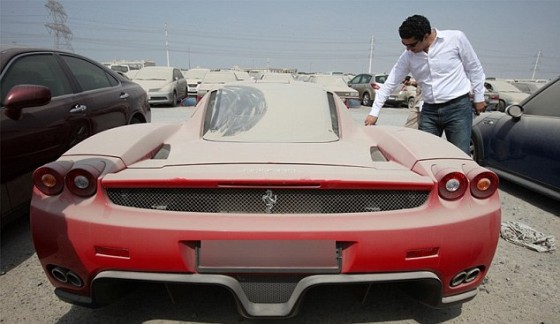
Car dumping is happening all over the Emirates. Abandoned cars line streets and car parks in Dubai. According to Dubai Municipality, 3,040 cars were deserted across the emirate this year, some found with keys in the ignition. Dubai International Airport is also haunted by these luxury ghosts
“I’ve seen a few cars here that are covered with dust,” M.T. Hassan, a Sudanese public relations officer told The National. “Maybe some of the owners will return, while others may have already left the country. We really don’t know.”
Ramesh Menon, an Abu Dhabi government worker, suspects the latter. He visited the airport in mid-July. Returning weeks later, the same cars remained parked. “If the owner parked there by mistake, he or she will claim it,” said Menon. “If it’s deliberate, the car should be auctioned off to the public.”
Flat tires are a giveaway. “Abu Dhabi airport has tight security. I don’t think someone will go and puncture tires. The authorities should consider removing them to allow other cars to park,” Menon said. “These cars eat up a lot of space and it gives the city a bad image.”
Car dumping is happening all over the Emirates
Abandoned cars line streets and car parks in Dubai, too. The United Arab Emirates (UAE) was badly bruised by the 2008 financial crisis. Projects folded, investments shrank, and jobs evaporated under the UAE sun. Many debt-ridden expatriates cut their losses and abandoned their cars en route to flights home.
A check on some of the plates revealed that most of the cars had racked up steep fines for traffic violations, unpaid parking fees and car payments and Salik fees and fines (Dubai’s electronic road toll system).
According to Dubai Municipality, 3,040 cars were deserted across the emirate this year, some found with keys in the ignition. Dubai International Airport is also haunted by these luxury ghosts.
Once a car is suspected of being abandoned, municipal inspectors slap on a warning notice. Fifteen days on, if the owner doesn’t respond, the vehicle is confiscated and taken to a scrap yard where it can be reclaimed for about $200. Most are never reclaimed.
Last year Abu Dhabi auctioned off 400 abandoned vehicles. To date, Dubai hasn’t gone the public auction route.
The splashiest derelict to date, a limited edition Enzo Ferrari, was dropped in a car park when it’s debt-ridden British owner fled Dubai in 2010. The red hot rod, one of only 399 in the world and one of the fastest cars ever made, was impounded last year. It’s thought the owner was being chased for unpaid traffic fines. The car, not quite as pricey as Abu Dhabi’s solid gold Mercedes, was valued at $1.6 Million.
Being in debt in Dubai is a crime
The United Arab Emeriates has no bankruptcy law to protect debtors. Post-dated checks are frequently used as a guarantee by UAE businesses, banks and individuals for everything from apartment rentals to multi-billion dollar business deals. Bouncing a check is a criminal offense in the UAE, punishable by fines or jail terms.
Last May, five expats jailed in Dubai went on hunger strike to protest against lengthy prison sentences handed down for rubber checks. The men, mostly real estate developers and businessmen working during Dubai’s boom years, fell into debt when the emirate’s property bubble burst.
I’ve found no follow-on news as to the outcome of that strike, nor was it reported if these guys bailed on their cars. But you see a probable motivation for ditching luxury cars.
But don’t pin the trend on expats only: a recent batch of Abu Dhabi pound cars included ten belonging to Emiratis, seven to Europeans, one to a Russian expatriate and the remainder were owned by local companies.
Police collected nearly $3 million in the last five auctions for cars and motorbikes. Seems some crime pays out after all. | DailyMail / greenprophet#end.
Cool × Moto × Places × World
Permanently parked in Australia’s inhospitable Strzelecki desert, just off the road near Cameron Corner stands one of the most incongruous objects you’ll ever see: a cheery though weary yellow 1952 Leyland double-decker bus – or to be precise, the abandoned remnants thereof.

Bus Da Move… NOT
Permanently parked in Australia’s inhospitable Strzelecki desert, just off the road near Cameron Corner stands one of the most incongruous objects you’ll ever see: a cheery though weary yellow 1952 Leyland double-decker bus – or to be precise, the abandoned remnants thereof.
 (images via: Wellyboots 2012)
 (images via: Bus Australia and Michael McFadyen Scuba)
 (image via: Garry)
Outback Mistake House
You’d think there’d only be one dummy dumb enough to drive a double-decker bus into the hotter, dryer, ever more isolated Australian Outback but that would give down-under dummies too much credit. Indeed, there’s an identical, yellow, abandoned double-decker bus moldering away behind the Betoota Hotel between Windorah and Birdsville.
 (images via: Michael Hornbogen Photography)
 (image via: Ozzie’s Darkroom)
Gimme Bus Shelter
 (images via: Through My Kitchen Window and Cafe Press)
The bus is better known as the living space and home base of Australian artist Joshua Yeldham. Born in 1970, Yeldham set out one day in the early 1990s in his VW Combi van, searching for inspiration along the sprawling Dingo Fence. By chance, his van happened to break down near Cameron Corner and as a Kombi doesn’t offer much living space, Yeldham co-opted the empty bus: he ended up staying there 6 years.
 (image via: 4WD Action)
 (images via: HeritageFutures)
Spennemann’s strikingly ethereal images, several of which are showcased above, do justice while paying homage to the rare set of circumstances that have taken this bus where no bus has gone before.
The Outback Waits, Dreaming
 (images via: Adventure Rider, The Great Australian Ride and ExplorOZ)
“And guess what? I got my answer. At that very moment, a guy pulled up in his Ute with the big aerials, driving lights, bull bar and fluffy dice on the rear-view mirror, and jumped out with his girlfriend. He headed over to the bus and said proudly, “Look, darling, there’s my name. Wishbone. I did that – isn’t it great?” His girlfriend just giggled nervously, not really knowing what to say. They were both right near me and I overheard this profound dialogue. I couldn’t believe I had actually now met the owner of the graffiti.”
 (images via: WorldNomads and KCpics73)
 (image via: Let’s Go Travel Australia)
Lifestyle × World
Street signs are boring. They pepper the landscape and add just a little bit more monotony to our lives. Thankfully, some homegrown artists and fans of culture jamming decided to mix it up a bit, and add some spice to an otherwise dull aspect of our daily commute.

These are some of the most creative sign changes around. With tons of creativity, and equal skill, these signs will force anyone into a doubletake.
There have been an increasing number of news stories about electronic construction signs being hacked by mischievous hoodlums. While it may not be in the best interest for the state, it certainly makes the highway trek a bit more interesting.


Anything can be adjusted! Adding one’s own spin to street signs, or “finishing” road paint jobs that could use an update is a public service. Culture jamming is fun for the whole family.
Who knew “do not enter” signs had such potential for awesomeness? Some people saw it, as these signs are covered with excellent graffiti.
| DailyMail #end.
Cool × Lifestyle × World
Nothing brings people together like a gigantic party, especially if it’s got a bizarre theme like roadkill, bugs, testicles or tomato throwing. People convene in massive numbers for some pretty crazy things, from rolling cheese down a hill in England to covering themselves in mud from head to toe in Louisiana.

Rio Carnival

It may just be the biggest and most outlandish party on earth. During the four days before Lent, real life comes to a screeching halt in Brazil to focus on the three pillars of Carnival: samba, women and beer. Female dancers push the public nudity envelope in barely-there costumes festooned in sequins and feathers, leading a massive parade of the 14 schools of samba, with each school wearing a different type of costume. Other events include street processions and masquerade balls.
Louisiana Mudfest

(images via: LouisianaMudfest.com)
The Louisiana Mudfest may or may not be the South’s biggest party, but it’s definitely the dirtiest. Off-road vehicle enthusiasts love nothing more than to go ‘mud riding’, and this festival draws thousands of 4×4 owners and their families to play in over 300 acres of mud.
La Tomatina Tomato-Throwing Party

(images via: WebEcoist)
From WebEcoist: “Once a year, tens of thousands of tourists gather in a town in Spain to hurl over one hundred tons of overripe tomatoes … all in just one hour. When the festival is called to a halt fire hoses are used to clean the streets as well as the participants. For this brief but amazing food fight the size of the town quadruples, drawing visitors from all over the world to participate in the largest spaghetti sauce bath of all time.”
Burning Man Festival

(images via: Declan McCullagh)
Burning Man, which takes its name from the ritual burning of a large wooden effigy, is held every year at the end of August in the Black Rock Desert of Nevada, drawing some 50,000 people to the remote area for “community, artwork, absurdity, decommodification and revelry”. To attend Burning Man is to temporarily step into an alternate world where clothing is optional, weird is normal, there’s always something new to try and wildly artistic creations are everywhere you look.
Holi Festival

(images via: Newshopper)
For hundreds of years, Hindus in India, Nepal, Bangladesh and other countries have welcomed the arrival of spring with a “festival of colors” celebrating the escape of a Hindu figure named Prahlada from death by fire due to his devotion to the god Vishnu. On the main day of the festival, called “Holi”, participants throw colored powders and liquids at each other, which were traditionally made from medicinal herbs that fight viral fever and cold.
Flash Mob Pillow Fights

(images via: Piccadilly Wilson)
On March 22nd, 2008, the largest pillow fight in the history of the world took place in 25 cities across the world including Boston, Copenhagen, Dubai, London, Shanghai and Sydney. Worldwide Pillow Fight Day was the first “international flash mob”, organized through social media, email, texting and word of mouth. 5,000 people participated in New York City alone, pounding each other with pillows and releasing millions of feathers into the air.
A Valentine’s Day flash mob pillow fight in San Francisco created such a mess, officials plan to crack down on participants in the future.
The Love Parade

(images via: Berlin-life.com, Wayfaring.info)
It started as a political demonstration for peace through love and music, organized by the Berlin Underground in 1989 four months before the Berlin Wall was demolished. Over the years, The Love Parade has grown into one of the world’s biggest outdoor dance parties, drawing millions of people from around the world and spurring similar events in other cities. The focus of the events is electronic dance music including trance, house and techno.
Hadaka Matsuri

(images via: WeirdAsianNews)
It’s cold in Japan in the middle of winter – but that doesn’t stop thousands of men from donning loincloths, soaking each other with water and fighting each other for the chance to catch one of the ‘shingi’, wooden sticks dropped among the crowds that are said to bring one year of good luck. The men are kept warm on the frigid January night by each other’s bodies and lots of sake.
Bugfest

(image via: Raleigh2)
Insects aren’t creepy – they’re just misunderstood. At least, that’s what Bugfest organizers hope to convey as they entertain crowds of people every September in Raleigh, North Carolina with bug-related displays, exhibits, activities and “delectable dishes”. Samples of buggy dishes are free, so fill up on scorpion taquitos and deep-fried grasshoppers.
Cheese Rolling Festival

(images via: BBC News)
Every year near Gloucester in the Coltswold region of England, thousands of people convene to roll a round of Double Gloucester cheese down a hill and chase after it. Though the goal is to catch the cheese, that rarely happens considering it can reach speeds of 70mph; instead, the first person to cross the finish line wins. Nobody knows exactly how the tradition started, but people are certainly willing to injure themselves for it, coming down the hill with broken bones and concussions.
Kanamara (Big Metal Phallus) Festival

(images via: NowPublic)
Since the dawn of human existence, there have been fertility rites centering around phallic objects. Modern Japan carries on the tradition with ‘Kanamara’, the Festival of the Steel Phallus. Revelers sit astride gigantic wooden penis models and hug them for good luck, carve phallic symbols out of daikon radishes and walk around sucking on phallus-shaped lollipops. The festival is centered around a local penis-venerating shrine where prostitutes once prayed for protection against STDs.
Spamarama

(images via: Photolulu)
People really love potted meat products. In America, annual odes to Spam occur in both Hawaii and Texas, and both include coming up with as many variations of Spam-themed dishes as possible. Hawaii residents consume five million pounds of Spam every year – that’s six pounds for every man, woman and child. Waikiki’sSpam Jam drew 20,000 people last year to consume Spam and buy Spam-related merchandise.
In Austin, Texas, Spamarama expands on that idea with ‘Spamalympics’, a Spam cook-off and a Spamburger eating contest.
Eye Gazing Parties

(images via EyeGazingParties.com)
What can you learn by staring at someone in silence for three minutes? According to Michael Ellsburg, who came up with the idea of ‘eye gazing parties’, you can gain an unspoken connection with a stranger without the distraction of superficial conversation. At eye gazing parties, an even number of singles meet up in bars and restaurants and switch off staring at one another. Once the staring part of the party is over, people can talk to each other and exchange contact information.
| Weburbanist #end.
Cool × Places × World
When considering small countries, places like Vatican, Monaco, and Luxembourg often come to mind. But these countries are very big compared to some of the less known “micronations” scattered across the globe. These micro-states that can just be an acre small are formed to fulfill a variety of purposes: from artistic and political protest, to good old-fashioned tax evasion.
Have you ever wanted to rule your very own country? Bizarre as it sounds, a micronation is an area of land claimed by one or more persons to be independent from any major recognized nation in the world. Some of these have incredible histories of war, triumph and independence and still survive today, while others have long since been abandoned, annexed or destroyed.


Above: Sealand inside and out after the fire of 2006
Above: A brief history of Sealand and information on its sale
Sealand was established in the 1960s an Englishman and his family took possession of an abandoned anti-aircraft platform off the coast of Britain and declared it to be the Principality of Sealand. In the1970s a coup attempt was made and the island was taken over by one citizen of Sealand with outside assistance. Sealand was retaken with armed forces and its overthrowers were held for a time as prisoners of war until negotiations with foreign nations secured their release. More recently, Sealand caught fire though no one was seriously injured. Sealand has since been of international news interest in relationship to its controversial status as a data haven.
Above: bizarre silent film: Molossia propaganda spoof
Molossia was founded in the 1970s on a small stretch of land in rural Nevada. The population of four claims to be an independent nation-state though it is completely encompassed by the United States of America. In theory, the country has a constitution. In practice, there has been “political unrest” which has given rise to a state of martial law in which the president (Kevin Baugh) has full authority. In Molossia, incandescent light bulbs, cat fish and tobacco have all been outlawed. Molossia was even host to the first ever intromicronational olympics.

Places × World
Avanos Hair Museum: a small cave containing hair samples, names and addresses from more than 16,000 women from all around the world.
 The hair museum was founded by Chez Galip, a talented potter in Avanos. Although there are conflicting stories about where the idea came from, Galip’s own website states that the museum was simply meant as a promotion to increase enrollment in his pottery workshops. It seems much nicer to believe the legend: Galip’s friend was moving far away and left him a lock of hair to remind him of her, then subsequent visitors began leaving locks of hair to remind the potter of them as well.
Visitors to the cave are not required to leave a sample of hair, but Galip provides all of the materials necessary for those who wish to leave a little piece of themselves behind. What reportedly began as a promotional stunt has evolved into a weirdly compelling display – whether that display is of generosity, a great sense of humor or something else entirely is up to the viewer to decide.
| mb #end.


