
 RSS
RSS Twitter
 Facebook

Showing posts with label Health. Show all posts
Health × People × Video × Yes
Facing a double mastectomy with grace takes courage. Facing one with courage and joy is extraordinary.
This inspiring 6-minute-long video, posted on YouTube, shows Cohan busting some serious moves as she wiggles and twerks to Beyonce’s hit “Get Me Bodied.” Cohan requested that friends and family make videos of themselves dancing to Bey too so that she could watch them during her recovery. “I have visions of a healing video montage,” she wrote. “Nothing brings me greater joy than catalyzing others to dance, move, be in their bodies. Are you with me people?”
They were. You can check out videos of Deborah’s fans shaking their booties in solidarity on her CaringBridge page.
Deborah, we wish you a speedy recovery. And can we go clubbing with you when you’re all better?

| huffingtonpost #end.
Health
Or at least a modest imitator, in successful mouse transfusions

"Mice treated with this ... artificial blood did not experience any side effects, and this is precisely what we want," says Silaghi-Dumitrescu, via Medical Daily. He's hoping his material would keep recipients going at least for a few hours, if not a whole day. Previous attempts at artificial blood have hit a stumbling block by focusing on hemoglobin, an oxygen-carrying molecule that can easily fall apart. Silaghi-Dumitrescu's product, however, depends on a sturdier substance called hemerythrin, which exists in invertebrates. Mixing hemerythrin with salt and a type of protein called albumin might be a recipe for "instant blood"—just add water.
| Newser #end.
Health × Lifestyle
41% of all people suffering persistent pain (and 66% of people aged 16-24) felt better after... listening to music

The study of 1,500 people found pop music was the most effective pain reliever, followed by classical, then rock or indie music. The songs with the highest pain-relieving powers reported were "Bridge Over Troubled Water" by Simon & Garfunkel, "Angels" by Robbie Williams, "Albatross" by Fleetwood Mac, "Candle in the Wind" by Elton John, and "Easy" by The Commodores. This may be an eyebrow-raiser for some people—like the Guardian's music editor, who jokes: "This slightly contradicts my own survey, which found that 100% of all respondents (sample size: one) thought 'Candle in the Wind' induced chronic pain, but there you go."
| Telegraph. #end.
Health
They're linked to hyperactivity, says group

Kellogg's and General Mills, which use the dyes in a wide range of foods, are next. So is this cause for Halloween worry? A Syracuse.com story about the petition wraps up with a quote from a pediatrician with four kids of his own: "The best thing to do is use common sense. Eating M&Ms occasionally as a treat is fine. Eating a pound a day is not."
| IBT #end.
Health × IT
Some Apple users are sick of the company's new iOS 7 operating system. Literally. The new zoom and slide animations, and the 'floating" icons on the home screen, are causing motion sickness in many people with vestibular disorders—conditions that affect balance and vision

"Tap an app and it's like flying through the icon and landing in that app's micro world—and I'm getting dizzy on the journey there." Other symptoms from exposure to this kind of animation can include "intense nausea, dizziness and vertigo," says a spokesperson for the Vestibular Disorders Association. One developer affected by motion sickness has already built an app to disable the offending features, reports Stuff. But others say Apple itself needs to step up.
Tech writer Kirk McElhearn says Apple was once "at the forefront of providing accessibility options," but now needs to demonstrate more sensitivity to users like him.
"Their apparent disregard is disturbing, and shows a trend toward paying lip service to accessibility, but not thinking it through," he writes on his blog Kirkville.
| Guardian, photo by Anick Jesdanun #end.
Health
With growing awareness, people have become more health as well as beauty conscious. In this aesthetic-loving age, it is very essential to let people know that what they consider 'aesthetic' is also related to their skin. Importantly, manifestations of your nutritional status as well as body’s nutritional needs reflect on the skin's health.
.jpg)
caffeine:
Excess caffeine may increase cortisol(stress hormone) levels in our body.It leads to aging and damage our skin.It can thinner your skin and prone to wrinkles, dehydration, lackluster appearance. Better hydrated body can increase the skin appears.
2.Low fat
muffins:
Low fat muffins always attracts and also it has less fat which are reduced fat version from the full fat muffins.Most of the manufactures reduce the fat and add makeup to it.It has less calories compare to fully fat muffins.Low fat muffins are made up of adding more sugar(artificial sweeteners) which causes damage to skin.
3.Shellfish:
Shrimp,crab,lobster,seafoods and spinach are high in iodine.Diet with these foods may cause acne,because of heavy intake of iodine in a short time.who are suffering from acne related problems should control the eating of those foods.
4.White
bread:
Starchy food is not good for skin.Food which are high in glycemic such as pasta,noodles,bread and cakes may cause acne and make your skin swollen.
5.Salt:
It makes your skin puffy and unhealthy.Heavy intake of salt may cause retain water in eyes,which leads to swelling because the skin around the eyes are very thin.Make sure check the prepacked food products for sodium content before using them rinse all canned vegetables,meat etc.....
6.Candy:
Candy contains full of sugar.Overeating of sugar contained foods leads to wrinkles and dull skin.It may damage elasticity of skin and collagen.Fiber in your body become dry and leads to cause swollen skin and sagging.
7.Alcohol:
Alcohol is not a food but more consuming of alcohol causes dehydration inside the body including skin cells. which leads to cause rosacea in some cases.
8.Processed
food:
Foods that which are precooked or cured meat may cause wrinkles.There is no proof to that in researches they found eating processed meat and starchy foods which are precooked cause wrinkles on the skin and also heavy diet of processed meat is risk in type II diabetes patients.
9.Excess use of artificial
sweetener/colors/flavors:
These chemicals once lodged in to our body it is more difficult to flush out those chemicals.Over intake and inability to flush out those chemicals may affects the fundamental nature of skin.
10.Milk:
Some dairy products may cause skin problems.In skim milk there is excess of bioavailable hormones which can overstimulate the glands that produce natural oily secretion from skin.In some people skim milk may cause rosacea.
| healthmeup.com #end.
Cool × Health
Eric Schlosser reveals shocking information about food production. His book "Fast Food Nation" throughout the year is not going down the list of best-sellers, "The New York Times."
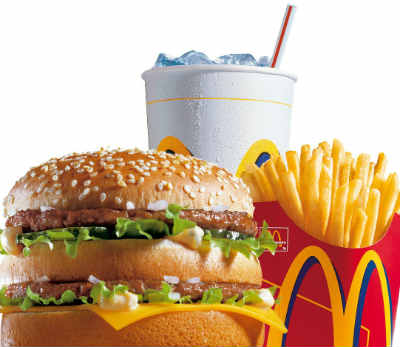
With a tasty and innocent looking food McDonald's lies to the incredible level of advanced science, technology, and marketing aimed primarily at children. Those who uncritically swallow the propaganda Corporate McDonald's (presenting their products as nutritious, and their shrines for fine place to spend with your family free time), you should fasten your seat belts. You have a unique opportunity to find out much more than McDonald's wants its customers to disclose. Enjoy.
Mc'relish
Frying chips was almost sacred to me" - he wrote in his autobiography, Ray Kroc, one of the founders of McDonald's. - "Preparation was rigorously repeated ritual." During the early years of McDonald's fries are made from scratch every day. Potatoes Russet Burbanks type were peeled, cut into strips and fried in McDonald's kitchens. In the mid-sixties, which is when the network has grown up all over America, it was decided to lower costs, reduce the number of suppliers and make it fries tasted the same at every point of the network.
McDonald's began to flip through the frozen french fries in 1966 and few customers noticed the difference. Despite this change had a huge impact on agriculture and the American diet. Universal food has been converted into a high-tech industrial goods. McDonald's fries now come from big factories, which can peel, slice, fry and freeze one million kilograms of potatoes every day. McDoanld's rapid expansion and popularity of cheap, mass-produced fries changed the eating habits of Americans. In 1960, Americans consumed an average of about 40 kg of fresh potatoes and 2 kg of frozen french fries. In 2000, they consumed an average of about 25 kg and 15 kg of fresh frozen French fries.
Today, McDonald's is the largest buyer of potatoes in the United States. Taste McDonald's french fries played a major role in the success of the network. The chips bring more profit than burgers and are praised by customers, competitors, and even critics. Their distinctive taste does not come, however, on the type of potatoes that McDonald's buys the technology it uses, or devices that frying them. Other networks also use Russet Burbanks potatoes, buy chips from the same major suppliers and have similar equipment in their kitchens. Flavor chips is mostly designated type of oil used. For decades, McDonald's fry their french fries in a mixture of cottonseed oil and 93% beef fat. The mixture gave frytkom unique flavor and more harmful fat in each gram of product.
In 1990, under the weight of criticism of cholesterol in French fries, McDonald's switched to pure vegetable oil. This, however, created a problem: how to make chips that taste like beef - but without frying them in beef fat? A look at the ingredients in McDonald's French fries suggests how the problem was solved. At the end of the list of ingredients is inconspicuous, and yet looking mysterious term "natural flavor" ("natural flavor"). This ingredient helps to explain not only why the fries taste so good, but why do most fast foods (in fact - most of the food that it America) tastes like it tastes.
Open your refrigerator, freezer, pantry - and look at the packaging of your food . You'll find "natural flavor" or "artificial flavor" on almost every list of ingredients. The similarities between these two broad categories are far more significant than the differences. Both are obtained by man additives that impart a specific flavor of most foods. People generally buy specific foods for the first time because of its packaging or appearance. Taste usually determines whether they buy it again.
Approximately 90% of the money that Americans now spend on food falls on technologically processed foods.
Techniques for canning, freezing and dehydration, used for reworking, destroying most of the taste of food. In this way, in the U.S. there was a great industry, designed to make food more appetizing. Without this flavor industry today's fast food simply does not exist. Names of the leading American chain fast food like McDonald's or Burger King, were rooted not only in the American reality, but they have also become extremely popular all over the world. Despite this, few are able to identify the companies that produce flavors for fast food.
Flavor industry is shrouded in great mystery. Leading companies do not want to disclose the exact formulas of flavor ingredients, nor indicate its customers. The secret is considered a fundamental matter, having to protect the reputation of popular brands. This is to be done to help the network fast food can continue to keep the public in the belief that the taste of the food they sell come with their own kitchen and not from distant factories run by other companies. McDonald's French fries are one of countless foods whose flavor is only part of a complex production process. In fact, the appearance and taste of what we eat today is an illusion, and that's on purpose.
Corridor taste
The highway from the New Jersey Turnpike's heart flavoring industry - corridor, which is full of refineries and chemical plants. International Flavors & Fragrances (IFF), the largest such company in the world, has a factory at the exit number 8A in Dayton, New Jersey. Givaudan, the world's second-largest flavor company, in turn, has its plant located next door in East Hanover. Haarmann & Reimer, the largest German company, has a plant in Teteboro - in the shadow of Manhattan, just like Tagasako, the largest Japanese flavor company. Flavor Dynamics has a plant in South Plainfield and Frutarom has settled in North Bergen, at the upper Manhattan. Elan Chemical is located in Newark (in the vicinity of aircraft landing near the Polish - MK). A dozen companies manufacture flavors in the corridor between Teaneck and South Brunswick.It is produced in the region is about 2/3 flavors sold in the U.S.
IFF plant in Dayton is a great, light building with a modern complex of offices, attached in front. It is located in the vicinity of the factory, plastics factory near the German chemical company BASF, as well as Jolly French Toast factory and the factory that produces cosmetics brand, "Liz Claiborne". Dozens of trucks were parked at the IFF loading dock the afternoon when I made a visit there, and the vents on the roof hung a thin cloud of steam. Before entering the factory signed a form that prohibits the disclosure of the names of brands of food, which are used in flavors produced by IFF.
Place reminded me of a chocolate factory. In the corridors floated wonderful smells. Men and women in neat white aprons enthusiastically went about their tasks, and laboratory tables and shelves fixed hundreds of small bottles. These bottles contain a strong, light sensitive chemical taste. Protect them from light brown glass and tight nuts. The long chemical names on little white labels were as mysterious to me as medieval Latin. These substances with strange sounding names are mixed and transferred, and then converted into new substances, like magic potions.
I was not invited to the factory IFF, venue of the production process. It was feared that I might reveal trade secrets. In return, I visited various laboratories and kitchens, where the flavors of well-known brands are tested and corrected, and where the basics are created entirely new flavors. "Laboratory snacks" is responsible for the taste of potato flakes and corn, bread, crackers, and pet food. "Laboratory Confection" inventing flavors of ice cream, cookies, candy, toothpaste, lotions, mouthwash and medicines stomach. Everywhere I turned, I saw a well-known and widely advertised products, lying on the desks and shelves laboratory. Laboratory of Fluid was full of brightly colored liquid in a clear bottle. They come here, among othersflavors of the popular beverage, tea, wine and wine similar, natural juices, organic soy drinks and beers. In one of the kitchen food technologist met neat, middle-aged man with an elegant tie into a clean apron, who carefully prepared batches of cookies with white icing and pink and white dots. In another kitchen I saw a pizza oven, BBQ, a machine for making milk drinks a "milk shake" and a machine for cooking chips - identical to those seen in countless bars, fast food (McDonald's, etc..).
IFF, except that it is the largest flavor company in the world, also produces fragrances for six of the ten best-selling perfume in the U.S., including: Estée Lauder - Beautiful, Clinique - Happy, Lancôme - Trésor, and Calvin Klein - Eternity. The company also produces fragrances for household products (including deodorants, detergents, soap, shampoo, polish for furniture and flooring). Creating all these flavors is based in practice on the same principle - the appropriate handling volatile chemicals. The secret behind the scent of your shaving cream is exactly the same as that which determines the taste of dinner from the supermarket freezer.
Natural and artificial
Scientists believe that people have developed the sense of taste, so that it can protect them from poisoning. Edible plants typically taste sweet, harmful rather tartly. taste buds on our tongues can detect the presence of a few basic tastes, including sweet, sour, spicy, salty and sour taste of umami discovered by Japanese scientists, which is triggered by amino acids in the food, as meat, fish, mushrooms, potatoes and sea weeds. However, on the tongue taste sensors are limited in comparison with the human olfactory system, which can detect thousands of different chemical flavorings. What is felt by us taste? - It is primarily the smell of gases that are released by the chemicals that you put your mouth is.
It is the aroma of food can be 90% responsible for her taste. act of drinking, sucking or chewing a substance releases volatile gases. These pass from the mouth and nose (or by the back of the mouth) to a thin layer of nerve cells, called "olfactory epithelium," located at the base of your nose and between the eyes. Your brain combines the complex smell signals from the olfactory epithelium ("olfactory epithelium") with simple taste signals from your tongue, determines the taste for what is in your mouth and decides further.
Preferences human habits, like nature, are formed in the first few years of life, through a process of socialization. Infants from birth prefer sweet tastes and reject sour. Older children can learn to liking to spicy food, ordinary healthy food or fast food - depending on what people eat around them. The human sense of smell is not yet fully tested. But we know that it is very dependent on psychological factors and expectations.
'Human mind deliberately focused only on some aromas that surround us, and rejects the vast majority. People can grow up in a habituation to unpleasant or pleasant odors. They can also stop noticing something that once bothered. Smell and memory are interconnected. Smell may suddenly get out of our memories long forgotten the situation. Food smells from childhood leave a lasting impression and adults often return to them, do not always know why this is happening. This "comfort food" that memory comes back to us, it becomes a source of satisfaction and sense of security. It is a fact that high-speed networks using food carefully. Memories of childhood Happy Meals that are served with fries, can translate into frequent visits to McDonald's in adulthood. On average, Americans eat fries out about 4 times a week.
Taste of human desire was in most cases not appreciated and researched by force in history. Over the millennia, empires were built, unknown lands conquered, and the great religions and philosophies forever changed - all the spice trade. In 1492, Christopher Columbus set out to find spices. Today, the influence of taste to the world market is no less effective. Rise and fall of corporate empires, the companies of beverages "soft drink" (Coca Cola), dry snacks (like potato chips) and network-foods (like McDonald's) are often determined how their products taste.
Short history
Industry flavor appeared in the mid-nineteenth century, when the processed food technology began to be produced on a mass scale. Recognizing the need for flavor additives, early manufacturers of processed foods have asked the perfumers who have a long time experience with essential oils and volatile aromas.
The great perfume houses of England, France and the Netherlands produced many of the first flavors. At the beginning of the twentieth century, thanks to a strong chemical industry, Germany took the lead in the production of technical flavors. (Translator's note: the first combat use of natural gas to the mass murder of soldiers in World War I is an example of advanced German chemical industry during this period.) As the story goes, a German scientist discovered methyl anthranilate (one of the first artificial flavors) by accident, during the mixing of chemicals in his laboratory.
/Eric Schlosser, "Fast Food Nation"/Businessman.com/#end.
Health × Lifestyle
Isn’t it astonishing that cosmetics do not require approval before they hit the market’s shelves? I had a hard time swallowing that until I read it straight from the Web site of the FDA (the agency that regulates the cosmetics industry).

Yikes. Well, there are those few prohibited substances. Thank goodness they saw to banning (a meager) 10 ingredients–as compared to 1,100 ingredients banned in cosmetics by the European Union. And while it’s good to know that the FDA is protecting us from mercury compounds and chloroform–what about the long list of other problem ingredients that are prohibited elsewhere but allowed in American beauty products?
When Natural Solutions magazine was considering products for their Beauty with a Conscience Awards 2008–highlighting the safest, greenest beauty products in the marketplace–they came up with a list of the top ingredients to avoid in personal care products. They worked closely with Whole Foods Market, whose personal care team has been developing the Whole Foods Premium Bodycare Quality Standards has listed 250 unacceptable ingredients for Premium Body Care. You know it’s a topsy-turvy world when retailers are having to do the work that the FDA isn’t interested in.
Here are the winners, or perhaps we should call them the losers, of their research–The Formidable 15: Toxic Ingredients to Avoid in Skincare.
1. SYNTHETIC FRAGRANCES often contain phthalates (pronounced THAY-lates), synthetic chemicals commonly used to stabilize fragrances and make plastic more pliable. These endocrine disrupters mimic hormones and may alter genital development. Avoid products that list fragrance as an ingredient unless the label states that it’s derived from essentials oils, or look for a phthalate-free label on the packaging.
2. PARABENS, ubiquitous in skincare, preserve other ingredients and extend a product’s shelf life–but these antimicrobial chemicals also have hormone-disrupting effects.
3. UREAS, formally known as diazolidinyl urea, imidazolidinyl urea, or DMDM hydantoin and sodium hydroxymethylglycinate, are preservatives that have the potential to release formaldehyde in very small amounts and are a primary cause of contact dermatitis.
4. 1,4-DIOXANE, a chemical carcinogen, is created when ingredients are processed with petroleum-derived ethylene oxide. Common ethoxylated compounds include sodium laureth sulfate and polyethylene glycol (often listed as PEG). To avoid it, skip any product with the following ingredients: myreth, oleth, laureth, ceteareth (or any other -eth), PEG, polyethylene, polyethylene glycol, polyoxyethylene, or oxynol.
5. PETROCHEMICALS are derived from crude oil. Petroleum-based ingredients such as petrolatum, mineral oil, and paraffin (derived from nonrenewable sources) form a barrier when applied to the skin that does not allow it to breathe and can clog pores.
6. MEA/DEA/TEA are “amines” (ammonia compounds) and can form harmful nitrosamines when they come in contact with nitrates. Used as foaming agents, synthetic stabilizers, and to adjust the pH of cosmetics, they can cause allergic reactions, eye irritation, and dryness of the hair and skin.
7. SULFATES, such as sodium lauryl and sodium laureth, are harsh detergents that give cleansers, soaps, and shampoos their latherability. Often derived from petroleum, sulfates can also come from coconut and other vegetable oils that can be contaminated with pesticides. Sulfates can cause eye irritation and skin rashes.
8. CHEMICAL SUNSCREENS, such as oxybenzone and octylmethoxycinnamate, have been shown to disrupt endocrine activity. Titanium dioxide and zinc oxide are safer alternatives.
9. QUATS, such as benzalkonium chloride, steardimonium chloride, cetrimonium bromide, and cetrimonium chloride, give a positive charge to conditioners in order to prevent static. They are necessary for conditioners, but we have allowed only the mildest quats in our Beauty With a Conscience standard: guar hydroxypropyltrimonium chloride, hydroxypropyltrimonium oligosaccharide, and SugaQuats.
10. ANTIBACTERIAL COMPOUNDS, such as triclosan and chlorphenesin, do not break down in the environment and may contribute to bacterial resistance.
11. SYNTHETIC POLYMERS, such as sodium polyacrylate and carbomer, come from petroleum and give viscosity to skincare products. They are highly processed and their manufacture creates toxic by-products.
12. SYNTHETIC COLORS are made from coal tar. They contain heavy metal salts that may deposit toxins onto the skin, causing skin sensitivity and irritation. Animal studies have shown almost all of them to be carcinogenic. They will be labeled as FD&C or D&C, followed by a color and a number.
13. CHELATORS, such as disodium EDTA and tetrasodium EDTA, are used in personal care products to remove impurities from low-quality raw materials. They do not readily biodegrade in the environment.
14. NANOS are a new technology with inconclusive but potentially hazardous study results. Research suggests that when tiny nano particles penetrate the skin, they may cause cell damage.
15. ANIMAL TESTING: A grim history of cruelty to animals lies behind many cosmetic ingredients. But scientists are developing new technologies to test cosmetics before a European Union ban on animal testing begins in March 2009.
| CARE2.com #end.
Health × Unbelievable
A type of liver disease once thought to afflict primarily adult alcoholics appears to be rampant in children

"This is just really worrisome to have this number of children who have a disease this severe," says a pediatrics professor whose research has found that the prevalence of fructose in Western diets could be partly to blame. The disease has no symptoms and public health experts are debating introducing widespread screening for it. Little is known about how the disease progresses into adulthood and for now, treatments for it and associated illnesses are limited: Doctors recommend weight loss through diet and exercise and treating inflamed livers with Vitamin E. (In other health news, a recent study found that one fruit rules supreme when it comes to lowering your diabetes risk.) | Newser. Photo: Daniel Martin , A la my#end.
Health × Unbelievable
The DEA is refusing to allow a new "meth-resistant" pseudoephedrine tablet to be sold over the counter, saying it can be used to make meth after all. The agency says government chemists were able to extract meth from Zephrex-D.

Westport has sold the drug in Missouri since December, and the Missouri Narcotics Officers Association say it hasn't found it in a single meth lab so far. "It's just not economically feasible for the meth-maker to use this product," says a local narcotics enforcement commander. But the DEA is sticking to its guns. "DEA commends the efforts of companies to develop products that deter the production of illicit drugs," it said in a statement. "While this particular company claims that their 'drug delivery system provides a new and unconventional approach to combat drug misuse,' this product can still be utilized to manufacture methamphetamine." | AP #end.
Coca-Cola × Health
Why Cola is not advertised as healthy for the human body?

Don’t drink cola if you want to be healthy. Consuming soft drinks is bad for so many reasons that science cannot even state all the consequences. If you do drink soft drinks, as well as other sugary foods, you need the two products listed at the bottom of this article.
10 minutes after: 10 teaspoons of sugar hit your system. (100% of your recommended daily intake.) You don’t immediately vomit from the overwhelming sweetness because phosphoric acid cuts the flavour, allowing you to keep it down.
20 minutes after: Your blood sugar spikes, causing an insulin burst. Your liver responds to this by turning any sugar it can get its hands on into fat. (And there’s plenty of that at this particular moment.)
40 minutes after: Caffeine absorption is complete. Your pupils dilate; your blood pressure rises; as a response, your liver dumps more sugar into your bloodstream. The adenosine receptors in your brain are now blocked, preventing drowsiness.
45 minutes after: Your body ups your dopamine production, stimulating the pleasure centres of your brain. This is physically the same way heroin works, by the way.
45 minutes after: The phosphoric acid binds calcium, magnesium, and zinc in your lower intestine, providing a further boost in metabolism. This is compounded by high doses of sugar and artificial sweeteners also increasing the urinary excretion of calcium.
50 minutes after: The caffeine’s diuretic properties come into play. (It makes you have to pee.) It is now assured that you’ll evacuate the bonded calcium, magnesium, and zinc that was headed to your bones as well as sodium, electrolytes, and water.
60 minutes after: As the rave inside you dies down, you’ll start to have a sugar crash. You may become irritable and/or sluggish. You’ve also now, literally, pissed away all the water that was in the Coke. But not before infusing it with valuable nutrients your body could have used for things like hydrating your system, or building strong bones and teeth. This will all be followed by a caffeine crash in the next few hours. (As little as two if you’re a smoker.)

I'm not a plantpotting !: Yes, I know , it's hard to switch to drinking water, as from time immemorial are accustomed to drinking sugary sodas , coffee and tea , or wine or beer.
It seems like if the water just does not taste. " I'm not a potted plant " , " ... the water is getting your feet wet " - joking , reaching the table a bottle of red wine.
In fact, however, the problem does not lie in the taste . Who does not want the water , when he is not thirsty . And if you feel the desire, it means that you lack the motion.
After I get some sweat during work or sports, drink several glasses of water is not just a necessity - it's a real pleasure .
When I was little , my mom signed me up , and the older brother to judo . We were crammed into the hall with an area of thirty square feet , lit neonówkami covered with tatami ( traditional Japanese mat ) and with skylights instead of windows . After an intense warm-up , during which we had to jump, run , do push-ups and sit-ups , the coach told us to fight standing and on the mat , and finally (and this was the most fun ) fought " the ponies ", that is , seated on his shoulders , trying to drop other " knights " .
At the end of the class , red , panting , sweating , threw himself into the locker room , where , near the toilets, sinks were in hot water - maybe it was warm , but how delicious ! Even the smell that emanates from the toilets did not bother us in filling the stomachs of the excellent water . The most impatient drank it straight from the tap , while others take in her hands and drank , trying not to spill the precious liquid . I prefer not to think about how the way we exchanged bacteria.
And yet I do not remember that the water tasted better than I ever there in the locker room of the club.
Why stop drinking Coke ? : Think about it. After the effort, you can feel like a Coke or a chilled beer, but it turns out that drinking the water gives you more pleasure. Water is the most tasty when you really want us to drink, just happens when you are very hungry. After returning from a trip to the mountains did not taste as good as regular sausage and nothing can help you return to your daily routine.
This is not only a pleasure. Drinking water helps reduce the intake of harmful substances such as phosphoric acid , which interferes with the metabolism of calcium and cause osteoporosis and osteomalacia and teeth , sugar, which contributes to diabetes , cardiovascular disease , arthritis and cancer, and to the formation of chronic inflammatory , aspartame, which causes side effects even 92 , including brain tumors , epilepsy , diabetes , and emotional hypersensitivity , caffeine, which causes convulsions , insomnia , headache , hypertension, bone demineralization and loss of vitamins.
In addition, acidic coli is lethal to the teeth. Have you ever noticed how after drinking Coke grind your teeth? Cola has more acid than lemon juice, so it can be used for removing rust from metal (try to leave a rusty coin coli for half an hour and see what happens ) . If you often drink cola , enamel of your teeth may become porous , turn yellow or gray .
The influence of obesity coli can talk endlessly , in children who drink cola risk of obesity increases by 60%. Of course you can give children a sweet sodas, if you want : increased risk of developing diabetes , increase the risk of developing cancer, make them sugar .


