
 RSS
RSS Twitter
 Facebook

Showing posts with label Tech. Show all posts
Tech
Every once in a while you come across certain DIY projects which reflect genius minds so purely that you are amazed by it.

Such DIY projects are those which can be put into the market and are bound to get amazing feedback and results; such as the ballast bulb. For those of you who are not familiar with DIY projects, here’s a brief introduction. DIY stands for Do it yourself.
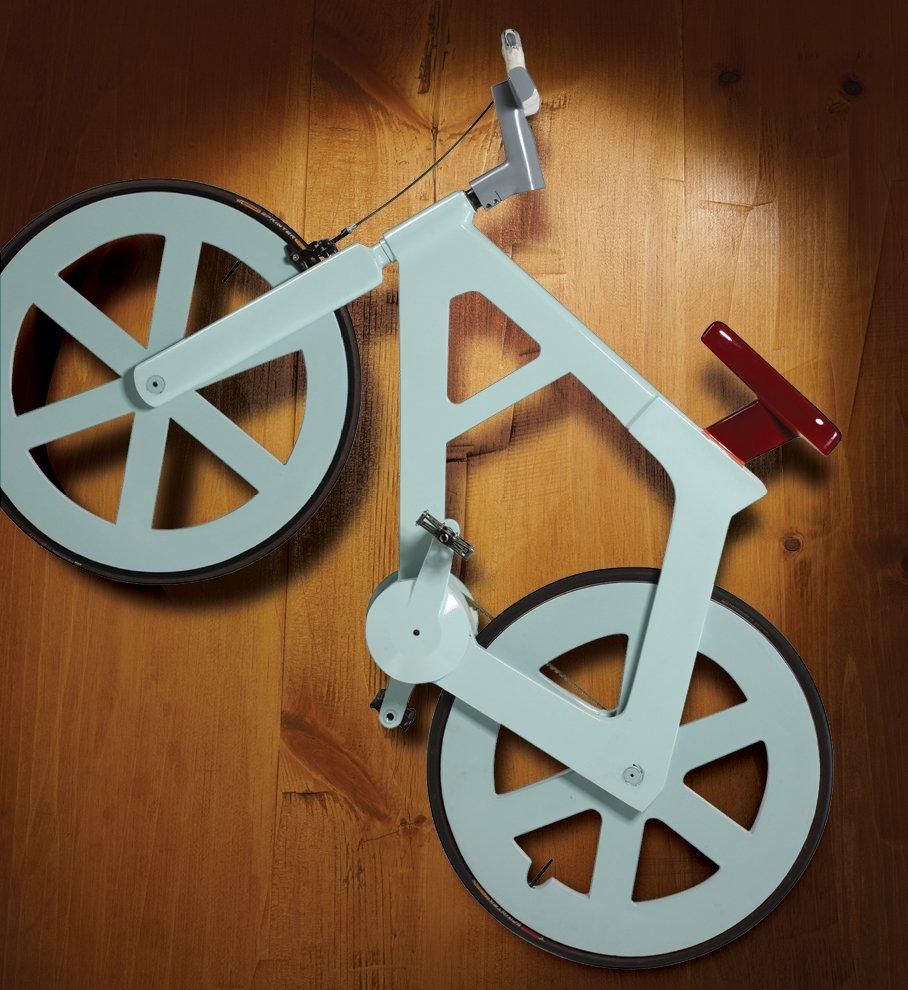
The idea is appealing and interesting. With the right mind set and tools, one can achieve whatever they set their mind to. Anyhow, enough of the pep talks, let’s get down to business. We will be talking about a DIY project which is bound to get into market with a bang. In 2009, Izhar Gafni, an Israeli Engineer was working on a boring project and if you must know it was the design of a machine that was supposed to extract seeds from pomegranates.
Our engineer was in the library and as every engineer would know, we all just love drifting in thoughts when we are working; his mind drifted to his favorite hobby, cycling. He was an admirer of the bikes made from sustainable bamboo, but the cost was too damn high. Let’s make it cost efficient, he thought.
How to do that was the question, but soon enough he had the answer; Cardboard. Engr. Gafni spent the next two years learning how to convert cardboard shapes into strongest shapes that was possible. This led him to strong structures which somewhat resembled honeycombs and bird nests.
The next year was spent in converting those shapes into bicycle components. Gafni said, ‘I almost felt like the Wright Brothers going into unknown territory.’
This hard labor proved fruitful when he emerged victorious with a single speed bicycle. The spokes, rims and the frame is made of cardboard. The paper is protected from moisture using varnish. Old car tires are used as puncture proof wheels for this bicycle. Furthermore, he used a car’s timing belt as a chain and pedal cranks were created from plastic bottles. The result, ladies and gentlemen; Alfa- a 28 pound prototype which can accommodate a rider 20 times its weight.
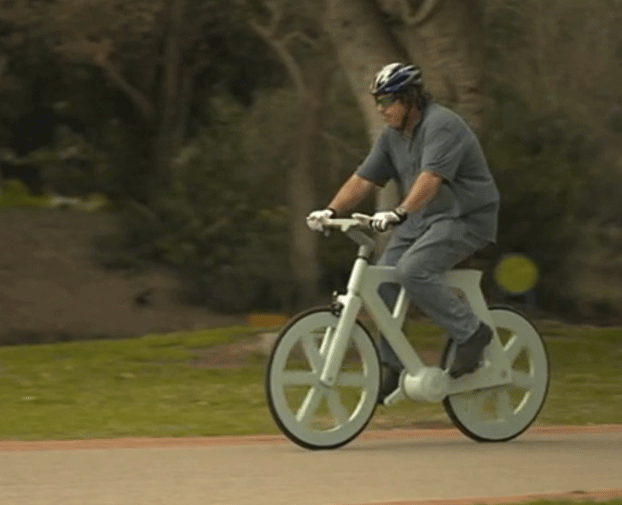
Engr. Gafni has plans to put two models to mass production; one for adult and one for children. The manufacturing cost is to be $9 in material and shall be sold for no more than $30. He has plans to make more useful things using this cardboard technique and was quoted saying; ‘You can do almost anything with it!’ This is something which we all might turn to in the coming future; using such materials for construction of everyday use items. | Wonderful Engineering #end.
Tech
You may have heard some interesting and already common facts about mobile phones on occasion. But what about the phone numbers that give you that unique mobile identity and make using your phone possible. Here’s ten great facts that you may have never heard before

of Phone numbers
Before their invention, phone calls were made by dialing the phone service first and requesting a phone operator sitting on the other end with various lines used to connect us to the person we wanted to contact. This was all fine and dandy until the process was questioned by Alexander Bell’s (the inventor of the phone himself) friend Dr. Moses. Because the town was infected with an epidemic of measles, the doctor advised initiating a new system without involving these operators for if any one of them fell ill, the others would find it difficult to understand the system and keep it running. Hence, the system of names was replaced by numbers dialed directly by the callers themselves.
9. The very first
Area code
The very first area code to be established was in New Jersey in 1951, which was labeled 201. The area codes in use now are an advanced and evolved version of the “North American Numbering” plan, in which the areas were numbered according to the ratio of their population. The one having the largest was given the simplest dial code for a rotary phone and it started with codes for 90 areas. Urban areas like New York, Los Angeles and Chicago got the codes 212, 213, and 312, respectively, and whereas more rural areas were given codes like 915, 913, etc.
8. The Most Expensive
phone number
666-6666 holds the record for most expensive number after being sold in Qatar for $207 million to raise money for charity. This number blows away the previous record held by 888-8888 sold in China for $280,000.
7. Apple related
to 888-8888
It is said that Apple co-founder, Steve Wozniak, had a thing for repetitive digits. It was because of his fondness for such numbers that he sold the Apple I for $666.66. This fondness, as legend has it, also led him to buy the second most expensive number in the world. The only drawback to the fantastic phone number was the hundreds of prank calls it received every day. While most of them were not of a malicious nature, there some particularly spiteful ones that may taken a toll on any man.
6. Emergency
Numbers
Different countries have various emergency numbers, for example 911 is the standard emergency number used in U.S. It was first pronounced as “nine eleven”, however the confusion of many users who searched for the “11” key on the dialer, led to it being changed to “nine one one”. In U.K, the number is “nine nine nine”; whereas Europe, you would dial 112 in emergency.
Before the system of a single number for emergency calls was introduced, people used to call the operators to direct them to the relevant emergency service. There are still some fire services in the U.S which can also be reached by dialing “3 4 7 3”, which spells “F-I-R-E”.
5. Movies ignoring
the 555 trend
Usually, when you see a phone number in a movie it will begin with “555″ because no such number exists with that pattern. Although it is not recommended, some movie production companies have their own numbers that appear in their movies, like Universal Studio. If you were to call the number, it would just continually ring on the other end.
One such movie faced some trouble for using a real phone number, supposedly belonging to God, and they had to change the number in the DVD release in order to resolve this issue.
4. Numbers and codes set
aside for fictional purposes
Many of us would have tried to dial the numbers our favorite T.V or movie characters dial in various scenes, but to your surprise you would find that those numbers are specially generated for these fictional purposes. “KL” exchange was the very first phone exchange used to generate such numbers for American movies. Currently, the prefix “555” is being used in U.S to set aside numbers for purely fictional purposes. In the U.K, the code “01632″ is used the same way but it also provides non-working suggestions for some other cities.
3. Phone Numbers
in Music
Like movies, numbers are also used in songs but they haven’t been set aside for this purpose especially. The most famous of all is that of Glenn Miller’s Pennsylvania 6-5000, which is still in use by the hotel mentioned in the song. The Hotel Pennsylvania (whose number was used) still boasts to have the number of the longest continuous use. It annoys all those who have the same number with a different area code as it appeared in song; 867-5309 is the catchy musical number belonging to Tommy Tutone. A very recent addition to this list is the number Alicia Keys claimed to be hers in her song Diary; after which, many of her fans attempted to give her a call.
2. Phone number
magic Trick
This trick is fairly self-explanatorys so give it try and impress your peers. The trick goes as follows: Take a seven-digit phone number, for example, 941-7990 and multiply the first three digits by 80. Then add one, multiply by 250 and add the last four digits of the original phone number. Finally add the last four digits again, subtract 250, and divide by two. Maths can be so miraculous at times, huh?
1. Personalized Phone
words: How to find one for you?
Just like the number spelling “F-I-R-E” is used to call fire brigades, chances are that your number might have a similar phone-word combination as well. In order to find out what it actually is, you can utilize the services of “PhoneSpell”. Along with just being interesting, they may be useful in making you remember a variety of different numbers. | GizmoCrazed #end.
Tech
Ah… the 80′s. For some of us, it’s a decade of bad music we love to listen to. For others it’s the days of growing up and the best cartoons ever made (Transformers…). For many more it’s an age of inventions and technological ideas that never really caught on with the public
Vibrating Sauna

Do-All System

Domed Homes

Electric Doormat

Somehow, this turned from a very simple, easy-to-use object into something so complicated it committed commercial suicide. The key to the electric doormat’s anti-tripping technology were belts looped over separate pulleys, alternatively mounted on counter rotating drums on each side of the mat.
Gull-Wing Doors

First thing’s first: The term “gull-wing” comes from the doors’ resemblance to a seagull’s outstretched wings. Mercedes-Benz were the first to manufacture such cars in the 1950′s. A more serious attempt from a few companies in the 1980′s was made, but the trend never caught on. These doors make it impossible to tie down big and heavy objects to the roof, and in-case of the car rolling over, mean the passengers are stuck.
Speaker Vest

The Everything Card

For more “awesome” inventions and gadgets that never really stuck with the public, here are a few that simply came way ahead of their time.
| Walyou #end.
Cool × Tech
Eesha Khare, a high-school pupil from San Jose, California, has created a gadget which fully charges a mobile within 30 seconds.The device, called a supercapacitor, small enough to fit into a phone, could mean an end to ever running low on battery power.

Inevitably, you’ll probably throw it on the charger for as many minutes as you can afford before heading out, but settle on the idea that you will be incommunicado during the latter portion of the night. That is, unless teenage innovator Eesha Khare’s creation sees the light of day. As told by SlashGear, the 18-year-old developed a means of fully charging a cellphone battery in — count ‘em — as little as 30 seconds.

As of now, Khare says she plans to use her prize money to help fund her education at Harvard, where she hopes to continue researching her project. But she currently has no plans to sell her technology, though it seems like she is keeping her options open.
As presented at the science fair, her creation charges an LED, but she says that it is flexible. It can easily adapt so that it can be used in flexible displays and even in fabric. Right now, it can hold 10,000 recharging cycles, which is far better from the standard rechargeable battery, which can only withstand around 1,000. We’re eager to see the day that we can plug our phones in (or just rest them on a wireless charging dock), and less than a minute later, be good to head out the door, worry-free.
| digitaltrends #end.
Tech × Unbelievable × Varia
Thought your shiny new car looked pretty impregnable? Think again. Two researchers have shown that they can unlock a car - and even start the engine - using a simple text message.

By setting up a local GSM network in the vicinity of a Subaru Outback, the team were able to intercept password authentication messages sent between the electronic key fob and the vehicle. What happens next is not exactly known, because the researchers haven't divulged all their secrets as a courtesy to the manufacturer.

From there, they could work out which commands were useful, and write their own messages to send that could unlock - and even start the engine of - the car. The whole process took them just a matter of hours. The team haven't gone into detail about which other cars might share these vulnerabilities, but the communication devices built into the vehicle are generic items - so the chances are that the problem could be widespread.
More worryingly, their technique could be used to attack other systems. Any device that routinely recieves firmware updates via text message, such as traffic control systems and security cameras, could be fair game. Perhaps worst of all, it could also attack SCADA sensors, which are used to monitor industrial systems such as the power grid and water supplies. "I could care less if I could unlock a car door," Don Bailey told CNN. "It's cool. It's sexy. But the same system is used to control phone, power, traffic systems. I think that's the real threat."
Though there has been no formal statement made by Subaru, Bailey has notified the manufacturer, and they are apparently taking steps to remedy the situation.
| newscientist #end.
Places × Tech × World × Yes
Superpowered skyscrapers seem to be all the rage these days. London has one that can melt cars, and now South Korea is planning to build one with the power of invisibility.
 |
| The world's first 'invisible' skyscraper has received Permit approval for construction near Incheon International Airport just outside of Seoul, Korea |
At 1,476 feet tall, the Tower Infinity will rise out of the ground near the Incheon International Airport just outside of Seoul. And it will be invisible. To disappear into the background, the tower will be equipped with a system of optical cameras that projects what’s behind the building onto its glass sides. Karla Cripps at CNN has more details:
Cameras will be placed at three different heights on six different sides of the building to capture real-time images of the surroundings; three other sections, each filled with 500 rows of LED screens, will project the individual digital images.
Through digital processing, images will be scaled, rotated and merged to create a seamless panoramic image that appears on the LED rows to create the illusion of invisibility.
Unlike with an invisibility cloak that a human might want—where the image on the cloak would have to change constantly as they moved around—the tower will (hopefully) be staying in one place and require changes much more slowly.
The tower was designed by a U.S. company, GDS Architects, and funded by Korea Land & Housing Corporation. GDS Architects has some mock-ups on its website of what the inside and outside of the building will look like. The company writes that “Instead of symbolizing prominence as another of the world’s tallest and best towers, our solution aims to provide the world’s first invisible tower, showcasing innovative Korean technology while encouraging a more global narrative in the process.”
| Smithsonian.com #end.
Tech × Unbelievable
FBI employs a number of high-tech hacker tactics in its efforts to round up information on suspects, including the ability to remotely activate microphones on Android devices and notebook computers, according to one of its sources who is described as a “former U.S. official.”

The tools it uses are both internally and externally sourced, with some coming from the private sector. Hacking at the FBI under court order has gradually increased, as law enforcement officials try to find ways to circumvent new communication tech that’s more resistant to traditional surveillance methods like wiretapping. The specifics of its methods are not generally brought to light in public, but a warrant from earlier this year revealed that one request involved using a computer’s built-in camera to take photos of a suspect without their knowledge. The request in that case was denied.
According to the WSJ’s source, the FBI resorts to these tactics when they’re out of options, and “don’t have any other choice.” The tools used to gather the data are often installed remotely, using essentially phishing style links that injects essentially Trojan software when clicked by a suspect under surveillance. They can also be installed via physical access and a USB drive, the report says, and in all cases the FBI tries to ensure only “relevant data” are gathered by its hacking efforts, through the use of a screening team that checks for relevancy before handing information off to investigators working the case.
The news that the FBI employs hacker tactics on occasion to gather data about potential suspects is not new, but the specifics of how it goes about it, and how it might be able to employ a user’s own hardware to record conversations remotely is definitely going to raise some eyebrows, especially in light of the attention now focused on digital rights and privacy thanks to the leaks around the NSA’s PRISM and XKeyscore programs. In theory, the devices could even be activated to eavesdrop on an in-person conversation with a potential suspect who doesn’t even own an Android device, perhaps from the pocket of a friend who does. PRISM reportedly involves a number of prominent Internet companies, and Xkeyscore seems to allow the U.S. security agency unprecedented access to information about emails, chat history and more, according to information leaked by former U.S. government security contractor Edward Snowden.
In this case, it sounds like the FBI’s tools might involve Android and desktop PC malware, so Google wouldn’t need to be complicit for claims about using Android device mics remotely to be accurate. We’ve reached out to both the FBI and Google for comment, but have yet to hear back as of press time.
| TechCrunch/WSJ #end.
Facebook × IT × Tech × Varia
The Social networking site Facebook has launched a new app which erases pictures and messages within 10 seconds of being sent. It is an advanced version of one of the the social networking site's original apps, the 'poke'.

It has now been reinvented to be called 'Facebook Poke' and allows users to send fleeting messages, pokes, photos and 10-second videos to friends.
The messages expire after a set period of time, from 1 to 10 seconds, and cannot be retrieved by either party again, making it perfect for sending salacious images without leaving a trail.
"With the Poke app, you can poke or send a message, photo, or video to Facebook friends to share what you're up to in a lightweight way," said the site in a blog post announcing the new app.
When you open the app, you can choose from a set of icons at the bottom of the screen to send a poke, type a 120-character message, open the camera to snap a picture - you cannot choose an existing photo - or shoot a 10-second video.
You then decide how long you want the recipient to see the message for.
It is said the new facility is similar to Snapchat, an app which is popular with younger age users, and which has gained a reputation as a tool for sending risque images.
Facebook is encouraging users to report inappropriate messages.
"If you ever see something you're uncomfortable with, you can click the gear menu and report it," the paper quoted the company as saying.
| MB #end.
Tech × World
Increasing trend towards extreme spires and other extensions of tall buildings that do not enclose usable space, and create a new term to describe this – Vanity Height, i.e., the distance between a skyscraper’s highest occupiable floor and its architectural top

 |
| Greatest SupertallVanity Ratio With a vanity height of nearly 124 meters within its architectural height of 321 meters, the Burj Al Arab has the highest non-occupiable-to-occupiable height ratio among completed supertalls.39% of its height is non-occupiable. |
Consider it "the architectural equivalent of wearing platform shoes," writes Gwynn Guilford at Quartz. The worst offender by percentage is the Burj al Arab hotel in Dubai, with 39% of its total height deemed useless. New York City will soon have three in the top 10, however: One World Trade Center will be at 30% when it's completed, behind the New York Times Tower (31%) and the Bank of America Tower (36%). | Newser, infographic: ctbuh #end.
Tech
In 4 steps, we show, how to connect PC or laptop to TV set

The fresher HDTVs and PC computers have DVI ports so a DVI Male to Male wire or DVI to HDMI Linker Wire can be recycled to knob the PC show and the TV set. The DVI to HDMI wire can be recycled when your HDTV doesn’t have a DVI port but does have an HDMI port.

Link the Audio RCA Wire for Sound
Step 2:Currently that you have linked the PC to the TV set by means of a corporeal wire, you necessity added wire to transfer the sound as all the beyond wires only transfer the video nevertheless not the audio chunk. You necessity a 3.5MMSmallSocket to RCA Wire Stereo to link the audio link out from a pad to your TV set. The red wire linker goes into the red hole of your TV set, black linker into the black hole while the black linker goes into the 3.5mm earphone jack of your PC

Mini to RCA Audio Wire
Step 3:Open the screen sceneries on your Windows PC and stimulate the output to the TV display. You can either glass contented of your PC on the TV set or encompass the show just similar a twin monitor display.
Step 4: Choice up your TV isolated and control to Exterior Inputs from the menu. You will necessity to alternate the evasion “Video 1″ to a diverse choice which may be “HDMI 1″ or “Video 2″ liable on how you have ended the linking.
Note: Make sure that you link the corporeal wire to the TV set before turning on the PC as sometimes it might miscarry to identify exterior show. You might also necessity to change the display determination of your TV set by means of the Show sceneries in your Control Panel else the image may at times seem one-sided.
Pros and Cons of Linking PCs and TVs
Interacting your PCs and TVs affords the greatest expedient partaking of multimedia pictures:
- does not need linking a digital camcorder
- can generate the needed links with any Windows, Mac or Linux PCs
- through Media Focus Extender or alike ability, can direct relaxed from any home PC to the TV set
end.
Tech × Yes
Negotiators working on a successor to the Kyoto Protocol in Qatar ought to know that 1,700 gigatonnes of carbon lie buried in the permafrost, which is double the amount that currently wreaks so much havoc here on earth, reports UNEP. Then, as arctic temperatures rise as a result of global warming and the permafrost melts, tons of heat-trapping gas will gush into the atmosphere.

A Thawing Bomb
“Permafrost is one of the keys to the planet’s future because it contains large stores of frozen organic matter that, if thawed and released into the atmosphere, would amplify current global warming and propel us to a warmer world,” said Steiner.
“Its potential impact on the climate, ecosystems and infrastructure has been neglected for too long,” he added.
The UNEP report, Policy Implications of Warming Permafrost was designed to spur dialogue among climate-treaty negotiators, policy makers and the general public as they prepare to create a successor to the Kyoto Protocol that expires this year. It also hacks a path to the way forward, instead of dropping concerned parties in an alarmist cloud.
Three proactive steps
First, the report’s authors recommend that the IPCC – the official voice of climate change – commission a special report that reveals the potential impact that carbon released from 30-85% of the permafrost might have on the environment, which would in turn support emergent (and enormously important) policy decisions.
Then, northern countries, especially Russia, Canada, China and the United States, should assume responsibility for permafrost monitoring stations that share data across a network. “The International Permafrost Association should continue to coordinate development and the national networks should remain part of the Global Terrestrial Network for Permafrost,” UNEP urges.
And finally, it behooves these nations to prepare for the worst. Structural damages, habitat destruction, migration, longer growing seasons, and increased risk of fire are just a few potential consequences.
Infrastructure collapse
But the biggest fear for those of us shy of oil spills, we already have an idea of what will happen if pipelines laid over this territory are destabilized as a result of the shifting ground.
“Infrastructure failure can have dramatic environmental consequences, as seen in the 1994 breakdown of the pipeline to the Vozei oilfield in Northern Russia, which resulted in a spill of 160,000 tonnes of oil, the world’s largest terrestrial oil spill,” UNEP reports.
These events are always financially crippling, politically disastrous, and environmentally criminal, which is powerful ammunition for the likes of Bill McKibben and the 350.org (global) crowd, as well as other activists, moviemakers and indigenous people who are determined to fell the Keystone XL Pipeline project.
For a much more detailed and scientific analysis of the permafrost bomb, we beg you to visit the UNEP website.
| Green Prophet / Shutterstock#end.


